
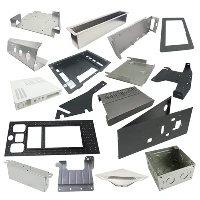
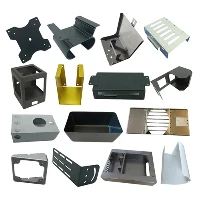
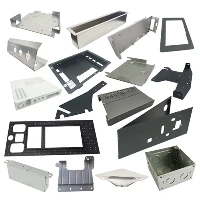

7 common inspection methods for stamping parts. Generally, during the stamping process, the temperature of the workpiece will rise rapidly during the stamping process, especially during the cold forging stamping process. Lubricating products must be added for lubrication.
If you do not use lubrication and directly Stamping, welding-assembly, parts without oil on the surface are easy to weld and assemble. Research and practice have shown that Amico metal inert gas arc welding, gas tungsten arc welding, and resistance welding have excellent results.
Flexible gauze grinding Wipe the surface of the outer cover with a clean gauze. Use a flexible sand net to closely adhere to the surface of the stamping part and grind it longitudinally to the entire surface. Any pitting and indentation will be easily found.
2. Touch inspection Wipe the surface of the outer cover with a clean gauze. The inspector needs to wear touch gloves and touch the surface of the stamping part along the longitudinal direction of the stamping part. This inspection method depends on the experience of the inspector. If necessary, the detected suspicious area can be polished with oilstone and verified, but this method is an effective and quick inspection method.
3. Visual inspection Visual inspection is mainly used to find abnormal appearance and macroscopic defects of stamping parts.
Whetstone grinding First wipe the surface of the outer cover with a clean gauze, then polish it with a whetstone (20×20×100mm or larger), and use a relatively small whetstone to polish the places with arcs and hard-to-reach places (for example: 8×100mm semi-circular whetstone) The choice of oilstone grain size depends on the surface condition (such as roughness, galvanized, etc.). A fine-grained oilstone is recommended. The direction of the oilstone grinding is basically along the longitudinal direction, and it fits the surface of the stamping part well, and some special places can also supplement the horizontal grinding.
Gauge detection Put the stamping parts into the inspection fixture, and inspect the stamping parts according to the operation requirements of the inspection fixture manual.
Oil inspection Wipe the surface of the outer cover with a clean gauze. Then use a clean brush to apply oil evenly along the same direction to the entire outer surface of the stamping. Put the stamped parts coated with oil under strong light for inspection. It is recommended to stand the stamped parts on the body position. With this method, it is easy to find tiny pits, pits, and ripples on the stamping parts.
Production issues Safety production In actual production, technological tests similar to the stamping process are commonly used, such as deep drawing performance test, bulging performance test, etc. to test the stamping performance of materials to ensure the quality of finished products and a high pass rate.
The precision and structure of stamping parts equipment mold directly affect the forming and precision of stamping parts. Mold manufacturing cost and life are important factors affecting the cost and quality of stamping parts. Die design and manufacture require more time, which prolongs the production lead time of new stamping parts.
Standardization and development of mold bases, mold bases, and guides Simple molds (for small batch production), composite molds, multi-station progressive molds (for mass production), and the development of quick mold change devices can reduce the workload of stamping production preparations And shorten the preparation time, which can reduce the preparation workload and shorten the preparation time for stamping production, and can make the advanced stamping technology suitable for mass production reasonably applied to small batch and multi-variety production.
In addition to forming thick plates with hydraulic presses, stamping equipment generally uses mechanical presses. Transportation and other machinery, mold library and quick mold change device, and controlled by computer program, can form a high-productivity automatic stamping production line. In the case of producing dozens or hundreds of stamping parts per minute, the processes of feeding, stamping, output, and waste discharge are completed in a short period of time, and personal, equipment, and quality accidents often occur. Therefore, safe production in stamping is a very important issue.


