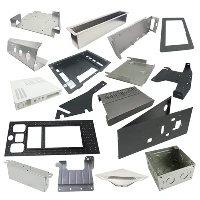
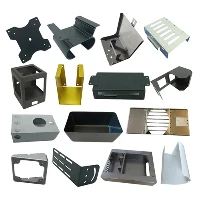
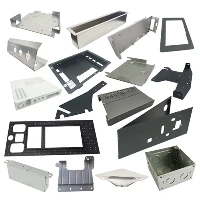

Factors affecting the dimensional accuracy of stamping parts
The dimensional accuracy of stamping parts refers to the difference between the actual size of the stamping parts and the designed size. The smaller the difference, the higher the accuracy. Ideally, the size of the blanking parts is the same as the size of the die cutting edge, and the size of the punching parts is the same as the size of the punch cutting edge.
In fact, due to the elastic deformation of the workpiece caused by the force during punching, the workpiece will undergo elastic recovery after the punching is completed, which causes the size of the blanking parts to be inconsistent with the size of the die cutting edge, and the size of the punching parts to be inconsistent with the punch cutting edge, affecting the dimensional accuracy of the stamping parts.
There are many factors that affect the dimensional accuracy of stamping parts, such as the punching gap, the manufacturing accuracy of the die, the material properties and thickness, the shape and size of the stamping parts, etc. The main factor is the punching gap. When the gap between the convex and concave dies is too large, the material is subjected to a greater drawing effect during the punching process, resulting in a large drawing deformation.
After the punching is completed, the size of the blanking parts is reduced due to the elastic recovery of the material, while the size of the punching parts is increased. When the gap is too small, the material is compressed and deformed due to the extrusion of the convex and concave dies.
After punching, the elastic recovery of the material increases the size of the blanking part, while the size of the punching part decreases. The dimensional accuracy of the stamping part is also related to the nature and thickness of the material. The nature of the material directly determines the elastic deformation of the sheet during the punching process. The softer the material, the smaller the elastic deformation, and the smaller the elastic recovery after punching, which makes the part more precise. The harder the material, the larger the elastic deformation, and the larger the elastic recovery after punching, which makes the part less precise. When punching thin materials, the elastic arch is large, and the elastic recovery is also large, which makes the part less precise.
In addition, the dimensional accuracy is also related to the shape and size of the part. The larger the size of the part and the more complex the shape, the more difficult it is to adjust the mold manufacturing, and the mold gap is not easy to ensure uniformity, so the size deviation is greater. The influence of the above factors on the dimensional accuracy of stamping parts is discussed under the premise of a certain mold manufacturing accuracy. If the mold edge manufacturing accuracy is low, the accuracy of the punched parts cannot be guaranteed. Therefore, the manufacturing tolerance of the convex and concave die edge size should be determined according to the dimensional accuracy requirements of the workpiece.
Nanpi Jian Tong Hardware Manufacturing Co., Ltd
+86-317-8851956
 Language