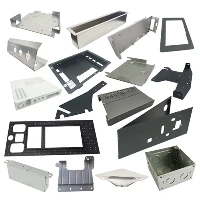

How to Achieve Rapid Prototyping in Sheet Metal Processing
Sheet metal processing is a widely used process in the manufacturing industry, involving the cutting, bending, forming, and joining of sheet metal. With the market's increasing demand for product delivery cycles and personalized customization, rapid prototyping technology is becoming increasingly important in sheet metal processing. Rapid prototyping not only shortens production cycles but also improves production efficiency and product quality.
Process Optimization
1. Material Selection and Pretreatment
In sheet metal processing, material selection directly impacts processing efficiency and finished product quality. Selecting the right sheet metal (such as stainless steel, aluminum alloy, and carbon steel) can reduce processing difficulty and increase forming speed. Furthermore, material pretreatment (such as surface cleaning and applying a protective coating) can prevent subsequent processing problems such as scratches and deformation, thereby improving overall efficiency.
2. Process Path Optimization
A reasonable process path is key to rapid prototyping. By optimizing the cutting sequence, bending sequence, and joining methods, processing time and material waste can be reduced. For example, in laser cutting, a reasonable cutting path can reduce idle time; in bending processes, selecting an appropriate bending sequence can avoid interference issues. 3. Standardized and Modular Design
Standardized and modular design can significantly improve processing efficiency. By designing standardized components and modules, the need for customized processing can be reduced, thereby shortening production cycles. Modular design also facilitates subsequent assembly and maintenance.
Equipment Upgrades
1. High-Precision CNC Equipment
High-precision CNC equipment (such as CNC laser cutting machines and CNC press brakes) is an essential foundation for rapid prototyping. These machines offer high speed, high precision, and high stability, enabling them to quickly complete complex processing tasks. For example, CNC laser cutting machines can achieve high-precision cutting in a short time, while CNC press brakes can quickly achieve bends at various angles.
2. Automated and Intelligent Equipment
The application of automated and intelligent equipment can significantly improve production efficiency. For example, automated loading and unloading systems can reduce manual operation time, while robotic bending systems enable continuous and efficient bending. Furthermore, intelligent equipment can ensure consistent processing quality by monitoring and adjusting processing parameters in real time.
3. Multi-Process Integrated Equipment
Multi-Process Integrated Equipment (such as integrated laser cutting and stamping equipment) can reduce changeover time between processes and improve overall efficiency. By integrating multiple processing steps into a single machine, rapid prototyping from raw materials to finished products is possible.
Applications of Digital Technologies
1. CAD/CAM Technology
CAD (Computer-Aided Design) and CAM (Computer-Aided Manufacturing) technologies are essential tools for rapid prototyping. CAD software enables rapid 3D modeling and design optimization of products; CAM software generates efficient machining paths and NC code, reducing processing time.
2. Simulation and Optimization Technology
Simulation technology can predict and optimize machining processes before they begin. For example, finite element analysis (FEA) can predict material deformation and stress distribution, thereby optimizing machining parameters. Virtual machining simulation can verify the rationality of machining paths and avoid problems during actual machining.
3. Digital Management and Monitoring
Digital management systems (such as MES systems) enable real-time monitoring and management of the production process. By collecting and analyzing production data, production problems can be promptly identified and resolved, thereby improving production efficiency and product quality. Furthermore, digital management can optimize production plans and rationally allocate resources. Other Key Factors
1. Personnel Training and Skill Enhancement
The implementation of rapid prototyping technology requires highly qualified operators and technicians. Regular training and skills enhancement can improve employees' operational proficiency and problem-solving abilities, thereby ensuring a smooth processing process.
2. Supply Chain Management
Efficient supply chain management ensures the timely supply of raw materials and the rapid delivery of finished products. By establishing close partnerships with suppliers, raw material procurement cycles can be reduced; by optimizing logistics management, delivery times for finished products can be shortened.
3. Quality Control and Feedback Mechanism
Quality control is a key guarantee for rapid prototyping. A comprehensive quality control system ensures that every step in the processing process meets standards; a feedback mechanism ensures that quality issues are promptly identified and resolved, thereby improving overall efficiency.
Future Development Trends
1. Application of Additive Manufacturing Technology
The application of additive manufacturing (3D printing) technology in sheet metal processing is increasing. Additive manufacturing enables the rapid prototyping of complex structures, thereby shortening production cycles.
2. Artificial Intelligence and Big Data Technology
The application prospects of artificial intelligence and big data technologies in sheet metal processing are promising. Artificial intelligence technology enables intelligent optimization and prediction of manufacturing processes; big data technology enables in-depth analysis and mining of production data, thereby improving production efficiency and product quality.
3. Green Manufacturing and Sustainable Development
Green manufacturing and sustainable development are key trends in the future manufacturing industry. The use of environmentally friendly materials and energy-saving equipment can reduce resource consumption and environmental pollution during the manufacturing process, thereby achieving green rapid prototyping.