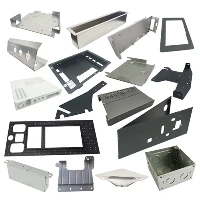

How to Handle Difficult Spraying During Sheet Metal Fabrication
Difficult spraying during sheet metal fabrication is a complex and challenging process, especially when dealing with complex shapes, high precision requirements, or specialized materials. The quality of the spraying not only affects the product's appearance but also directly impacts its durability and functionality. Therefore, handling difficult spraying requires systematic planning and execution across multiple aspects, including material selection, process optimization, equipment configuration, and personnel skills.
1. Material Selection and Pretreatment
Sheet metal materials vary widely, including stainless steel, aluminum alloy, and galvanized sheet. The surface properties of each material significantly affect the spraying results. Material pretreatment is particularly important in difficult spraying. The following are several key steps:
- Surface Cleaning: Before spraying, the material surface must be thoroughly cleaned of oil, rust, and impurities. Chemical cleaning, mechanical polishing, or sandblasting can be used to ensure a clean and contamination-free surface.
- Surface Treatment: For certain specialized materials, such as aluminum alloys, anodizing or chemical conversion treatment may be required to enhance coating adhesion. - Rust-Proofing: For rust-prone materials, phosphating or passivation treatments can be performed before spraying to enhance the coating's corrosion resistance.
2. Spraying Process Optimization
High-difficulty spraying often involves complex shapes or high-precision requirements, necessitating optimized spraying processes to ensure uniformity and consistency. The following are several common optimization methods:
- Multi-layer Spraying: For complex workpieces, multi-layer spraying techniques can be employed. First, a primer is applied to enhance adhesion, followed by a midcoat and topcoat for clearcoat protection. Each spray layer requires drying and sanding to ensure a smooth and uniform coating.
- Spraying Parameter Adjustment: Parameters such as air pressure, spray gun distance, spray speed, and paint viscosity during spraying need to be adjusted based on the workpiece's shape and material properties. For example, for complex curved surfaces, air pressure and spray speed can be reduced to avoid paint buildup or dripping.
- Automated Spraying: For high-precision or high-volume production, automated spraying equipment, such as robotic spraying systems, can be used. Automated spraying not only improves efficiency but also reduces human error and ensures consistent coating results.
3. Equipment and Tool Selection
High-difficulty spraying requires high standards for equipment and tools. Choosing the right equipment and tools can significantly improve spraying quality. Here are a few key points:
- Spray Gun Selection: Different types of spray guns are suitable for different spraying needs. For example, high-pressure airless spray guns are suitable for large-area spraying, while low-pressure spray guns are more suitable for fine-grained spraying.
- Spray Room Design: Environmental control in the spray room is crucial, especially temperature and humidity regulation. A good ventilation system prevents paint particles from becoming airborne, reducing contamination.
- Drying Equipment: The post-spray drying process requires strict temperature and time control. Ovens, infrared drying equipment, or UV curing equipment can be used to ensure a fast and defect-free coating.
4. Coating Material Selection
The choice of coating material directly affects the spraying results and the performance of the workpiece. The following are several common coating materials and their application scenarios:
- Epoxy Coatings: They offer excellent adhesion and corrosion resistance and are suitable for workpieces requiring high durability.
- Polyurethane Coatings: They offer excellent abrasion and weather resistance and are suitable for outdoor equipment or high-wear environments. - Fluorocarbon coating: Offers exceptional weather and UV resistance, making it suitable for workpieces exposed to harsh environments for extended periods.
5. Quality Control and Inspection
Quality control for high-difficulty spray coatings is crucial, requiring rigorous inspection to ensure that the coating meets specifications. The following are some common quality control methods:
- Thickness Inspection: Use a coating thickness gauge to measure coating thickness to ensure it meets design requirements.
- Adhesion Testing: Test the coating's adhesion using a cross-cut or pull-off method to ensure a secure bond to the substrate.
- Appearance Inspection: Use visual inspection or optical instruments to inspect the coating for smoothness, color consistency, and the presence of defects.
6. Personnel Skills and Training
High-difficulty spray coatings require high operator skills, necessitating regular training and assessment. Key skills include:
- Spraying Techniques: Operators must be proficient in spraying techniques, including spray gun operation, spray parameter adjustment, and spraying methods for complex workpieces.
- Problem Solving: Operators must be able to quickly identify and resolve problems that arise during the spraying process, such as sags, orange peel, and pinholes. Safety Awareness: The spraying process involves chemicals and high-voltage equipment. Operators must strictly adhere to safety procedures and wear protective equipment.
7. Environmental Protection and Sustainable Development
With increasing environmental protection requirements, even complex spraying processes require environmental considerations. The following are some common environmental protection measures:
Water-based paints: Compared to traditional solvent-based paints, water-based paints have lower VOC emissions and are more environmentally friendly.
Exhaust Gas Treatment: Exhaust gases generated during the spraying process must be filtered and treated to reduce environmental pollution.
Paint Recycling: Reduce paint waste and emissions through paint recycling systems.