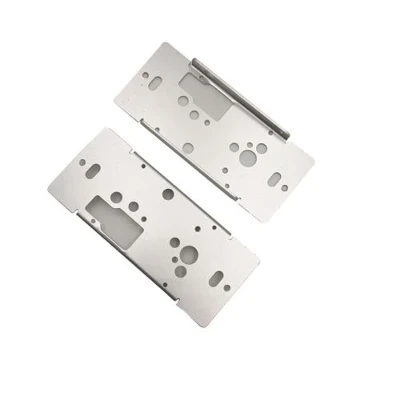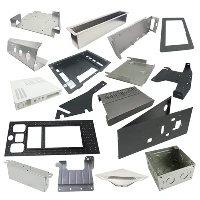
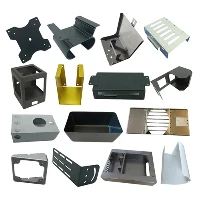
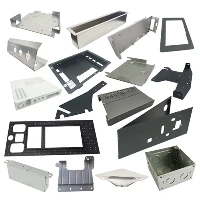

Materials for deep-drawn housing parts
Low-carbon steel materials can be used for deep-drawn housing parts. They have good formability (depending on the material grade), high strength, light weight, better cost-effectiveness than other drawing materials, stable forming dimensions, low corrosion resistance, and require post-processing protection such as electroplating.
Commonly used in various parts in automobile manufacturing, especially high-strength structural parts. Commonly used low-carbon steel materials are: 1008 low carbon steel, HSLA Grade 50 low carbon steel, 1010 low carbon steel, HSLA Grade 80 low carbon steel, DC03/DCO4, B340LA/B410LA, SPCC, SPCD, SPCE.
Stainless steel is also one of the commonly used materials for deep-drawn housings. It has the characteristics of high strength, light weight, high corrosion resistance, suitable for heat treatment, good wear resistance, and does not require electroplating protection. Commonly used in fuel supply systems, brake systems, emission systems, oxygen sensors and decorative parts in automobile manufacturing. Commonly used models are: 304L, 305, 310, 316, 410, 430.
Aluminum alloy deep-drawn housing has the characteristics of light weight (almost 1/3 of low-carbon steel), high strength, non-magnetic, and rust-proof. It is suitable for heat treatment and can be anodized to prevent corrosion. It is often used in automobile manufacturing and other industries such as heat dissipation devices, energy storage devices (such as batteries), beverage containers and pharmaceuticals. Commonly used aluminum alloy materials are: 3003, 5052, 6061.
Another is copper material, which is also a common material for deep-drawn housings. It has the characteristics of corrosion resistance and easy welding. It is used in the electrical industry, electronics industry and automotive industry. Commonly used copper alloys are: C22000, C26000, C28000, C52100.
Nanpi Jian Tong Hardware Manufacturing Co., Ltd
+86-317-8851956
 Language