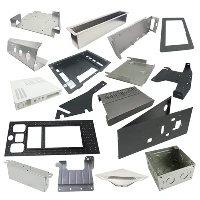
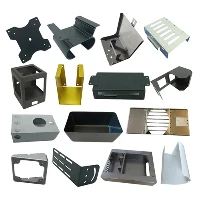

Stamping factory: Classification of stamping process
The stamping process can be roughly divided into two categories: separation process and forming process (also divided into bending, drawing, and forming). The separation process is to separate the stamped parts and the bad materials along a certain contour line during the stamping process, and the quality of the separated section of the stamped parts must also meet certain requirements; the forming process is to make the stamped blank undergo plastic deformation without damage and transform it into the required finished product shape, and it should also meet the requirements of dimensional tolerance and other aspects.
According to the temperature during stamping, there are two methods: cold stamping and hot stamping. This depends on the strength, plasticity, thickness, degree of deformation of the material and the equipment capacity. At the same time, the original heat treatment state and final use conditions of the material should be considered.
1. Cold stamping is the processing of metal at room temperature, which is generally suitable for blanks with a thickness of less than 4mm. The advantages are no need for heating, no oxide scale, good surface quality, easy operation, and low cost. The disadvantage is that there is a work hardening phenomenon, which makes the metal lose its ability to deform further in severe cases. Cold stamping requires that the thickness of the material is uniform and the fluctuation range is small, the surface is smooth, without spots and scratches, etc.
2. Hot stamping is a stamping method that heats the metal to a certain temperature range. The advantages are that it can eliminate internal stress, avoid work hardening, increase the plasticity of the material, reduce deformation resistance, and reduce the power consumption of the equipment.
Nanpi Jian Tong Hardware Manufacturing Co., Ltd
+86-317-8851956
 Language


