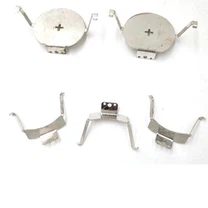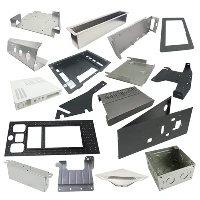
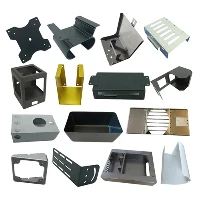
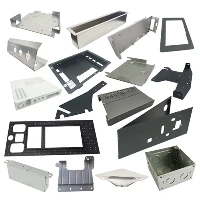

Surface processing methods of hardware parts
1. Spray painting
Hardware factories use spray painting when producing large hardware products. Spray painting can prevent hardware from rusting, such as daily necessities, electrical appliance shells, handicrafts, etc.
2. Electroplating
Electroplating is also the most common processing technology for hardware processing. Through modern technology, the surface of hardware parts is electroplated to ensure that the products will not be moldy and rusted after long-term use. Common electroplating processes include screws, stamping parts, battery cells, car parts, small accessories, etc.
3. Surface polishing
Surface polishing is generally used for daily necessities. For example, we produce a comb, which is a hardware part made by stamping. The corners of the stamped comb are very sharp. We have to polish the sharp corners into a smooth surface, so that it will not cause harm to the human body during use.
Turning the outer cylindrical surface is the basic method of outer cylindrical surface processing in hardware processing, and the equipment used is a lathe. In general machinery factories, lathes account for about 40% of the total number of machine tools. Turning is the main method for rough machining and semi-finishing of the outer cylindrical surface of various materials, and it is also the final finishing method for various materials that are not suitable for grinding.
When single-piece small batch production, turning the outer cylindrical surface is generally carried out on an ordinary lathe. In large-scale production, multi-tool semi-automatic lathes or automatic lathes are widely used. Large disc parts should be processed on vertical lathes. Large long shaft parts need to be processed on heavy-duty horizontal lathes.
The characteristics of turning the outer cylindrical surface are: 1. The tool is simple, easy to manufacture, sharpen and install; 2. The cutting process is stable, the cutting force fluctuation is small, which is conducive to the use of high cutting speed and improve productivity; 3. The machine tool has good versatility and can process the outer circle, end face, inner hole, thread and chamfer in one clamping. The relative position accuracy between the surfaces is easy to guarantee; 4. It is suitable for the finishing of non-ferrous metal parts.