Nanpi Jian Tong Hardware Manufacturing Co., Ltd
+86-317-8851956
 LanguageLanguage

What is Electric Cabinet
An electric cabinet (also called an electrical enclosure or electrical cabinet) is a container that houses electrical equipment and components. These cabinets protect the electrical equipment from various environmental factors such as dust, moisture, and unauthorized access. They are commonly used in industrial and commercial settings to house equipment such as circuit breakers, transformers, power distribution units, and communication equipment. Electric cabinets also help to organize and manage the cables and wiring that connect the equipment inside the cabinet.
Protection of electrical components
The primary function of electrical cabinets is to provide protection and safety to sensitive electrical components such as switches, relays, junction boxes, and control circuits. The electrical cabinet shields these components from dust, moisture, extreme temperatures, chemicals, and other environmental factors that can damage or interfere with their performance.
Improved aesthetics
Electric cabinets can improve the aesthetics of the workspace by concealing the electrical components from view. The cabinets can be designed with different finishes, colors, and textures, making it easier to blend them into the surrounding environment.
Customization
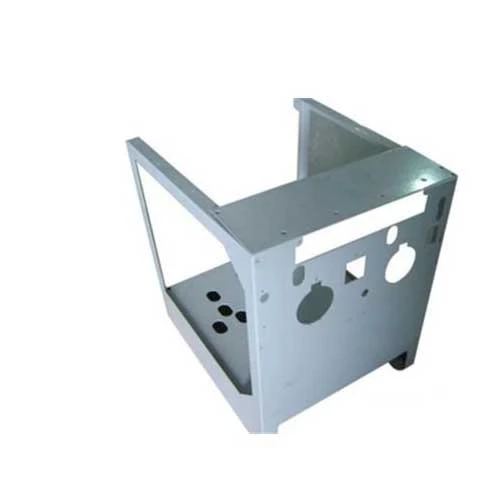
Electric cabinets can be customized to meet the unique needs of different applications. The cabinets can be designed to accommodate different sizes, shapes, and types of electrical components. Additionally, the cabinets can be built with specific features such as locking mechanisms, ventilation systems, and thermal insulation to suit the requirements of the equipment installed inside.
Efficient space utilization
Electrical cabinets provide efficient space utilization by housing multiple electrical components in a compact enclosure. This reduces the need for large spaces to accommodate individual electrical components and minimizes clutter in the workspace. The use of electrical cabinets also enhances organization and accessibility of electrical components, making it easier to troubleshoot and maintain the equipment.
Enhanced safety
Electrical cabinets play a crucial role in maintaining safety in the workplace. The cabinets prevent accidental contact between people and live electrical components, which can lead to electrocution or other serious injuries. The cabinets also prevent unauthorized persons from tampering with the electrical components, reducing the risk of equipment damage or failure.
Reduced downtime
Electrical cabinets minimize downtime by protecting the electrical components from damage caused by environmental factors or tampering. The cabinets enable quick and easy access to the electrical components, facilitating timely repairs and maintenance.


Types of Electric Cabinet

Wall-mounted cabinets
Wall-mounted cabinets are usually smaller in size and used for housing electrical devices such as control units, sensors, and other equipment used for process automation and monitoring. They are typically made of steel or aluminum with a hinged door for easy access and maintenance. These cabinets are easily mounted on the wall and are usually found in factories, power plants, and commercial buildings.
Free-standing cabinets
Free-standing cabinets offer more storage space and used for larger electrical equipment such as transformers, switchboards, generators and other power distribution components. They are large enough to house equipment that cannot be installed on the wall and require floor space. Free-standing cabinets offer more flexibility because they can be placed almost anywhere in a building, and therefore, they are commonly used in data centers, hospitals, museums, and other large commercial applications.

Console cabinets
Console cabinets are used to house control stations usually installed on the floor. They are large and designed to take up minimal floor space. Console cabinets are used for housing equipment that require frequent operator interaction, such as equipment used in process control, traffic management, and security systems. They may be customized to accommodate the unique requirements of the control system and the operator. Often found in security control rooms, traffic management centers, and process automation industries.

Outdoor cabinets
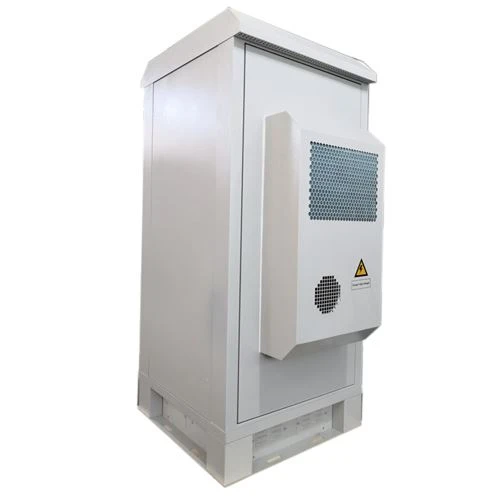
Outdoor cabinets are designed to be weather-resistant, and therefore, they are made of watertight materials such as stainless steel, fiberglass reinforced plastic, or aluminum. These cabinets are usually used to house equipment that cannot be kept indoors due to size or function and, therefore, must be placed outside, such as telecommunication equipment, power distribution transformers, and flood control equipment.

Air-conditioned cabinets
Air-conditioned cabinets are designed for outdoor or indoor use in applications where sensitive equipment requires air conditioning to operate in a stable environment. They are commonly used to house servers, telecommunication equipment, and other electronics that require precise temperature and humidity control. They can be designed with special features such as insulation, air filters, and HVAC systems. These cabinets are often found in data centers, server rooms, and telecommunication facilities.
Explosion-proof cabinets
Explosion-proof cabinets are specifically designed to protect equipment from explosions or other hazardous events that may occur in the surrounding areas. They are commonly used in the oil and gas, chemical, and mining industries where flammable or explosive materials are present. These cabinets are made of special materials and designed to withstand high temperatures, pressure, and shock waves. They also have features such as reinforced doors, explosion-proof windows, and air-tight seals.
Differences Between Power Distribution Cabinet, Switch Cabinet And Power Distribution Box
In terms of usage, distribution box is usually used in the family.The power distribution cabinet is multi-purpose in centralized power supply, such as industrial and building electricity, etc., distribution box and distribution cabinets are complete sets of equipment. Distribution box belongs to the low voltage complete sets of equipment and power distribution cabinet has high pressure low, distribution box and the power distribution cabinet size is different also, of course is a larger power distribution cabinet.And from the form say, the thing of distribution ark like its name is vertical ark, and distribution box is box body type. The box body that allocates electric energy calls distribution box. Mainly used for the control of electrical equipment, distribution, line overload, short circuit, leakage protection.Distribution boxes are installed in various places, such as schools, offices, hospitals, factories, workshops, homes, etc., such as lighting distribution boxes, power distribution boxes, etc.
Power distribution cabinet is the switch equipment, measuring instruments, protective appliances and auxiliary equipment assembled in closed or semi-closed metal cabinet or screen width according to the electrical wiring requirements, forming a low-voltage power distribution device.During normal operation, the circuit can be switched on or off manually or automatically.There are many kinds of distribution cabinet.In case of failure or abnormal operation, cut off the circuit or give an alarm with the help of protective appliances.By means of measuring instrument, various parameters in operation can be displayed, and some electrical parameters can be adjusted to indicate or send signals for deviation from normal working state.
Distribution cabinet can be equipped with various explosion-proof electrical appliances or various explosion-proof electrical combinations, such as: explosion-proof power (lighting) distribution box, explosion-proof electromagnetic starter, explosion-proof power maintenance box, etc.The distribution box can be equipped with circuit breakers, contactors, thermal relays, buttons and indicators, which can be used for lighting, power motor control purposes.That is to say distribution cabinet can contain distribution box. Function is compared more extensive, diversification.Often used in power generation, distribution plant, etc.
Distribution cabinet and switch cabinet performance is very different.Switch cabinet is a complete set of switchgear and control equipment, it as a power center and main distribution device. Mainly used for the control, monitoring, measurement and protection of power lines and main electrical equipment. Often set in the substation, distribution room, factory and other places.
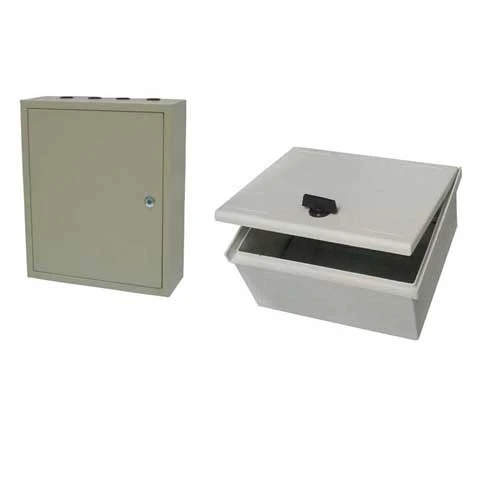
Custom electrical cabinetry is a crucial part of the electrical industry. Here, safety, reliability and efficiency are fundamental. Electrical cabinets provide an orderly arrangement of electrical machinery and switchgear, reducing the likelihood of errors and malfunctions. In addition, custom cabinets are developed in accordance with specific customer needs and industry regulations. This ensures maximum working and effectiveness.
Choose the right components
The first step in designing an electrical control cabinet is to select the appropriate components for your application, such as circuit breakers, relays, contactors, switches, fuses, transformers, and controllers. You should consider the voltage, current, power, and frequency ratings of each component, as well as their compatibility, functionality, and reliability.
Plan the layout
The next step is to plan the layout of your electrical control cabinet, taking into account the physical dimensions, mounting options, and wiring requirements of your components. You should aim to optimize the space utilization, accessibility, and airflow of your cabinet, while minimizing the cable length, clutter, and interference. You should also group the components according to their function, such as power supply, control, protection, and signaling, and label them clearly for identification and troubleshooting. You should use a CAD software or a schematic diagram to visualize and document your layout.
Install the components
The third step is to install the components in your electrical control cabinet, following the manufacturer's instructions and the wiring diagram. You should use the appropriate tools, hardware, and accessories, such as screws, nuts, bolts, washers, terminals, connectors, cable glands, and conduits. You should also ensure that the components are securely fastened, properly aligned, and adequately insulated. You should avoid any loose, exposed, or damaged wires, and use cable ties, ducts, or trays to organize and route the wires neatly.
Test the cabinet
The fourth step is to test the electrical control cabinet before connecting it to the system or the power source. You should perform a visual inspection, a continuity check, and a voltage test to verify that the components are correctly installed and wired, and that there are no short circuits, open circuits, or ground faults. You should also use a multimeter, an oscilloscope, or a logic analyzer to measure and monitor the electrical parameters and signals of your cabinet, such as voltage, current, resistance, frequency, and logic levels.
Maintain the cabinet
The fifth step is to maintain the electrical control cabinet regularly to ensure its safety and efficiency. You should clean the cabinet from dust, dirt, moisture, and corrosion, using a soft cloth, a vacuum cleaner, or a compressed air blower. You should also inspect the components for any signs of wear, tear, or overheating, and replace them if necessary. You should also update the software or firmware of your controllers or other programmable devices, and keep a backup of your configuration and settings.
Troubleshoot the cabinet
The sixth step is to troubleshoot the electrical control cabinet if you encounter any problems or faults in your system or your cabinet. You should use a systematic approach to identify and isolate the root cause of the problem, using the tools and techniques mentioned in the previous steps. You should also consult the manuals, datasheets, or technical support of your components or your system, and follow the recommended procedures and solutions. You should also document and report any issues or incidents that occur in your cabinet or your system.
Protection
The purpose of electrical cabinets is to shield potentially damaging elements of the environment, such as moisture, dust, and even direct human contact, from sensitive electrical equipment. They frequently make use of seals and gaskets in order to produce an airtight and secure enclosure.
Safety
Electrical cabinets offer an additional layer of protection against anyone coming into contact with active electrical components. They frequently have doors that lock and may have been constructed in a way that prevents unwanted entry.
Cooling & ventilation
Several electrical cabinets are equipped with ventilation systems (or) fans to help remove the heat that is produced by the enclosed equipment. This helps to maintain a temperature within the cabinet that is adequate for working at all times.
Cable management
In order to better manage & organize electrical wiring, electrical cabinets frequently include plugs or cable glands in addition to cable entry and exit holes for cables.
Mounting
They offer a wide range of mounting alternatives for electrical components, including DIN rails, backplates, and brackets, which are utilized to safely retain the apparatus in place.
Labeling and documentation
Correct labeling of components and detailed documentation within the cabinet are both helpful in identifying & troubleshooting problems with electrical systems.
Check if the voltages to the power sources of electronic devices are within the OEM (original equipment manufacturer) ratings by measuring them.
Before opening the cabinet door, determine the voltage levels inside.
Follow electrical safe work procedures, which include setting approach boundaries and wearing PPE.
If at all feasible, stand to the side while opening cabinet doors.
Examine the components and wiring visually for any noticeable faults.
Pay attention to color-coding systems and distinguish between power and control wires.
Check that the power and control cables are sufficiently separated.
Examine the right angles at which the power and control cables cross.
Check that the voltage at the field input & output devices is within specification by measuring it.
Tighten the terminal screws and inspect the integrity of the control terminations.
Founded in 2008, Jiantong Hardware is one of the leading Chinese OEM manufacturer that provides a complete spectrum of custom metal fabrication services to the global customers. These services include metal fabrication, precision stamping and deep drawing, metal forming, welding, tool & die work, machining, powder coating,anodizing and laser cutting. We also provides a broad range of prototyping and tooling, EDM cutting, assembly and much more.






We're well-known as one of the leading electric cabinet manufacturers and suppliers in China. If you're going to buy cheap electric cabinet, welcome to get quotation and free sample from our factory. All customized products are with high quality and low price.
Durable Outdoor Electrical Cabinet for Storage, Powder Coated Sheet Metal Telecom Cabinet, 30U Outdoor Electric Cabinet(0/10)
