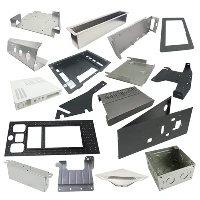
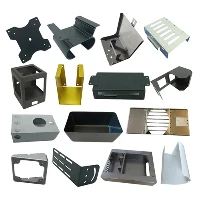
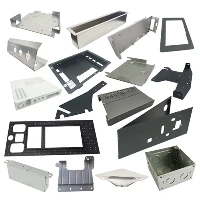

Processing characteristics of metal stamping dies
As an important metal processing method, metal stamping die processing has many significant characteristics. The following is a detailed introduction to its characteristics:
1. High production efficiency
Through the cooperation of dies and presses, metal stamping die processing can complete the production of a large number of parts in a short time. Compared with other processing methods, its production efficiency is several times or even hundreds of times higher. Especially under high-speed presses, hundreds or even thousands of parts can be produced per minute, which greatly improves the production speed.
2. Stable product quality and good interchangeability
The dimensional accuracy of stamping parts is guaranteed by the mold, which has extremely high stability and consistency. This makes the quality of stamping parts very stable and has good interchangeability, that is, stamping parts of the same batch can be used interchangeably without affecting the overall assembly and performance.
3. High material utilization rate
In the process of metal stamping die processing, the utilization rate of materials can be effectively improved through reasonable layout design and die structure. Using layout methods such as cross, oblique, multi-row, mixed, and nesting, even waste-free layout can be achieved, thereby significantly reducing material costs.
4. Wide range of applications
Metal stamping die processing is suitable for the production of parts with various materials and complex shapes. Whether it is thin plates, soft materials or difficult-to-process materials, they can be formed by stamping process. Especially for some miniature and complex-shaped parts, stamping is almost the only processing method.
5. Simple operation and low labor intensity
The stamping process is mostly completed automatically by the mold and press, and the operator only needs to perform simple operations and monitoring. This makes the technical requirements of the operator relatively low for stamping processing, and they can be put on the job after short-term training, which reduces labor costs and reduces the labor intensity of workers.
6. Energy saving and environmental protection
Metal stamping die processing generally does not require heating of materials, so it can save energy and reduce the pollution that may be generated during the heating process. At the same time, since the waste generated during the stamping process is less and easy to recycle, it also meets environmental protection requirements.
Nanpi Jian Tong Hardware Manufacturing Co., Ltd
+86-317-8851956
 Language