
Standards for precision hardware stamping parts processing
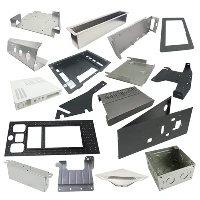
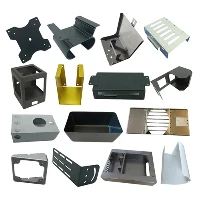
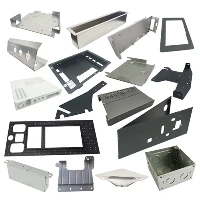
Hardware usually uses furniture plates, thick-walled tubes, thin aluminum materials, etc. as materials for hardware stamping processing. It has the advantages of quick use, high precision of stamping processing, and easy to achieve mechanical automation and automation technology.
Standards for hardware stamping parts processing:
1. High precision standards
The number of process steps for deep drawing parts is related to material properties, relative drawing height, number of drawing steps, drawing diameter, material thickness and other factors, and must be approved by deep drawing process calculation.
2. Detailed standards
The number of process steps for bent parts mainly depends on the complexity of their structural shapes, which needs to be determined according to the number of deformation angles, relative directions and bending directions.
3. Exquisite standards
When the cross-sectional quality and standard precision requirements of stamping parts are high, it can be considered to improve the repair process after the cold stamping process or immediately adopt the detailed cold stamping process.
4. Precision standard
When stamping parts with simple shapes, a single process mold can be used. When stamping parts with complex shapes, due to the limited structure or compressive strength of the mold, the surface should be divided into several parts for stamping, and multiple metal stamping processes are required. If necessary, a continuous mold can be used. For workpieces with higher flatness requirements, a straightening process can be added after the stamping process to accurately integrate the characteristics of each product into the production process.
5. Classic standard
In order to ensure the quality of metal stamping parts, it is sometimes necessary to increase the number of processes to improve the reliability of metal stamping processes. For example, the additional positioning process hole punching of bent parts, the deformation relief hole punching in the forming process to transfer the deformation zone, etc., to ensure the classic level of each product's meticulousness, precision and exquisiteness.
Nanpi Jian Tong Hardware Manufacturing Co., Ltd
+86-317-8851956
 Language


