
The Formation Process of Stamped Hardware Parts
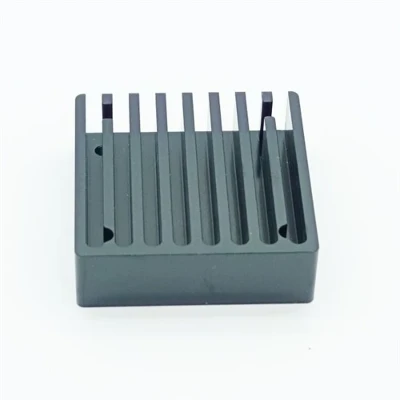
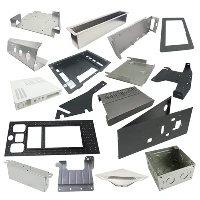
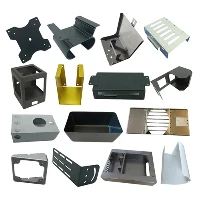
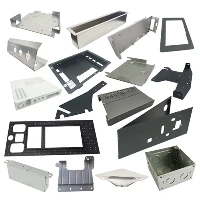
Stamped hardware parts are formed by applying pressure to metal sheets (or strips, profiles) using a stamping die, causing plastic deformation or separation to ultimately obtain hardware products with specific shapes, sizes, and properties. The entire process revolves around the coordination of "die + press + metal material," featuring high efficiency, high precision, and large-scale production, and is widely used in industries such as electronics, automobiles, home appliances, and machinery.
I. Core Formation Principle of Stamped Hardware Parts
The essence of stamping is utilizing the plasticity of metal materials (the property of undergoing permanent deformation without breaking under external force), and through the "cavity/cutting edge" of the die, applying pressure, bending, stretching, and shearing to break the original geometric shape of the material, forming a workpiece that meets design requirements.
Key Features:
The die is the "forming template": The shape and size of all stamped parts are determined by the die, and the die precision directly affects the product precision (typically ±0.01~±0.1mm).
The press provides power: Through mechanical or hydraulic drive, the force of the mold is transferred to the metal material, completing deformation or separation.
Materials are mainly sheet metal: Common materials include cold-rolled steel sheet, stainless steel sheet, aluminum sheet, copper sheet, and galvanized sheet, with thicknesses typically ranging from 0.1 to 10 mm (thick plate stamping requires specialized equipment).
II. Complete Formation Process of Stamped Hardware Parts (From Raw Material to Finished Product)
1. Raw Material Preparation: Selecting Suitable Metal Materials
Material Selection Basis: Materials are selected based on the product's intended use (e.g., load-bearing, rust prevention, electrical conductivity). For example:
General Structural Parts: Q235 cold-rolled steel sheet (low cost, good plasticity);
Rust Prevention Requirements: 304/316 stainless steel sheet;
Electrical Conductivity/Lightweighting: Aluminum sheet, copper sheet.
Raw Material Form: Usually in coil (strip) or sheet metal. Coils can be continuously fed using an uncoiler (suitable for mass production), while sheets need to be pre-cut to the corresponding dimensions.
2. Die Design and Manufacturing: The "Core Tool" of Stamping
Die is crucial for forming stamped parts and must be customized according to product drawings. It consists of an upper die (moving die) and a lower die (fixed die):
Die Structure: Includes a punch (forming the raised parts), a die (forming the recessed parts), a cutting edge (for shearing), a guiding device (ensuring alignment of the upper and lower dies), and a stripping device (preventing the workpiece from getting stuck in the die).
Manufacturing Precision: The die needs to undergo CNC machining, wire cutting, polishing, and other processes. The precision must exceed the product requirements (e.g., clearance controlled within 0.01~0.03mm), otherwise it will lead to burrs and deformation of the workpiece.
3. Stamping Forming: The Core Processing Link (Multi-Process Combination)
Depending on the complexity of the product, stamping may be a single-process or multi-process continuous stamping (completed through progressive dies or continuous die sets).
Continuous stamping (progressive die) is a highly efficient production method: after the material enters the die from the coil, it sequentially undergoes processes such as "blanking → punching → bending → flanging → unloading," completing the finished product in one go. It is suitable for mass production (e.g., electronic components, small automotive hardware parts, producing hundreds of pieces per minute).
4. Post-processing: Improving Product Performance and Appearance
Stamped workpieces require post-processing to remove defects and meet usage requirements:
Deburring: Removing residual burrs from the stamping edge through grinding, vibratory grinding, electrochemical deburring, etc. (to prevent scratches or affect precision during assembly).
Surface Treatment: Rust prevention and aesthetic treatments are performed according to requirements, such as:
Rust Prevention: Zinc plating (electroplated zinc, hot-dip galvanized), chrome plating, electrophoresis, spraying;
Aesthetic/Conductive: Polishing (stainless steel parts), anodizing (aluminum), nickel/gold plating (electronic components).
Inspection and Screening: Using equipment such as calipers, projectors, and 2D measuring instruments, checking dimensional and shape tolerances, and rejecting defective products.
III. Key Control Points in the Formation of Stamped Hardware Parts
Die Accuracy: Excessive or insufficient clearance between the upper and lower dies can lead to burrs and workpiece deformation. Regular die maintenance is necessary (e.g., polishing the cutting edge and adjusting the guide).
Material Plasticity: Insufficient material plasticity can cause cracking during stamping (e.g., steel plates with excessive hardness require pre-annealing for softening).
Pressure Parameters: The press pressure and stamping speed must be matched to the material thickness and die requirements (insufficient pressure will result in incomplete forming, while excessive pressure can easily damage the die).
Lubrication and Cooling: Lubricating oil (such as drawing oil or stamping oil) must be applied during stamping to reduce friction between the die and the material, prevent workpiece scratches and die wear, and simultaneously cool the workpiece. IV. Typical Case: The Formation Process of Automotive Stamped Parts
Taking a small hardware bracket on an automotive door panel as an example, the complete process is as follows:
Raw Material: 1.2mm thick Q235 cold-rolled steel sheet coil;
Die: Custom progressive die (including blanking, punching, bending, and flanging processes);
Stamping: The coil is fed into the press via an uncoiler, and the die continuously stamps:
Step 1: Blanking (cutting out the basic shape of the bracket);
Step 2: Punching (punching out 2 assembly holes);
Step 3: Bending (folding out 2 90° support edges);
Step 4: Flanging (flanging and reinforcing the assembly holes);
Post-processing: Vibratory grinding to remove burrs → Electro-galvanizing for rust prevention → Dimensional inspection → Packaging and shipping.
Summary
The formation of stamped hardware parts is a closed-loop process of "material selection → die customization → multi-process stamping → post-processing." The core relies on the precision of the die and the power transmission of the press, achieving efficient and large-scale production through the plastic deformation of the metal. Its advantages lie in its fast production speed, low cost, and good product consistency. It is suitable for mass production of various metal structural parts and functional parts, and is one of the most widely used processes in hardware processing.